

Eid ul-Fitr – Meaning, Sunnahs and How to Celebrate
Introduction
After a month of fasting, prayer, and self-discipline, Allah gifts the believers a day of joy: Eid ul-Fitr. It falls on the 1st of Shawwal, the month after Ramadan, and it is one of the two great festivals of Islam. Eid is not just food and new clothes — it is a thank-you to Allah for the strength to complete Ramadan, and a day of sharing happiness with everyone.
The Prophet Muhammad (peace be upon him) said that for the fasting person there are two joys: joy when he breaks his fast, and joy when he meets his Lord. (Sahih Bukhari, Sahih Muslim) In this article, we will learn what Eid means, the charity given before it, the Sunnahs of Eid morning, and how to carry the spirit of Ramadan forward.
What Is Eid ul-Fitr?
The word “Fitr” means breaking the fast. After thirty days of not eating or drinking from dawn to sunset, the first day of Shawwal is a day on which fasting is actually forbidden — it is meant for eating, meeting people, and rejoicing in a halal way.
When the Prophet (peace be upon him) came to Madinah, the people had two days of play and celebration. He told them Allah had replaced them with two better days: Eid ul-Fitr and Eid ul-Adha. (Sunan Abu Dawud) Celebration is part of Islam, within Allah’s limits: Eid begins with prayer and charity, and continues with family, food, and gratitude.
Zakat ul-Fitr: The Charity of Eid
Before anyone celebrates, Islam makes sure the poor can celebrate too. Zakat ul-Fitr (also called Sadaqat ul-Fitr or Fitrana) is a charity that becomes due at the end of Ramadan.
The companion Ibn Abbas (may Allah be pleased with him) reported that the Messenger of Allah (peace be upon him) made Zakat ul-Fitr obligatory as a purification for the fasting person from idle talk and foul language, and as food for the poor. Whoever gives it before the Eid prayer, it is accepted Zakat; whoever gives it after the prayer, it is just ordinary charity. (Sunan Abu Dawud, Sunan Ibn Majah)
Who must pay it? Every Muslim who has food and basic provision beyond his own needs for the day of Eid — for himself and for those he is responsible for, such as his wife and children. The head of the family usually pays on behalf of the whole household.
How much is it? The measure set by the Prophet (peace be upon him) was one saa’ of staple food — such as dates, barley, wheat, or rice. (Sahih Bukhari, Sahih Muslim) In most countries today, scholars announce a cash amount equal to the price of that measure of staple food, and it is usually a small amount that almost every family can afford.
When should it be paid? In the last days of Ramadan, and at the latest before the Eid prayer, so that it reaches the poor in time for them to join the happiness of Eid. Paying it early in the last ten days is allowed by many scholars and is often more useful for the poor.
The Night Before Eid
The night between the last day of Ramadan and Eid — often called Chaand Raat — is itself a blessed night, a time to finish Ramadan with gratitude and dua; many scholars hold that sincere worship in it is especially rewarded. Spend at least part of it in prayer rather than losing all of it to last-minute shopping. Prepare your Eid clothes, pay any remaining Zakat ul-Fitr, and sleep early enough to wake fresh for Fajr and the Eid prayer.
Sunnahs of Eid Morning
The Prophet (peace be upon him) taught us a set of beautiful practices for the morning of Eid:
- Ghusl: Take a bath before going out for the Eid prayer, just as we do for Jumu’ah.
- Best clothes and perfume: Wear your finest clean clothes — they do not have to be new; clean and neat is what matters. Men may apply perfume.
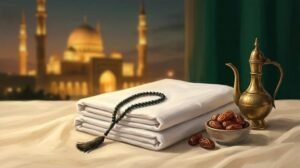
- Eat before the prayer: Unlike Eid ul-Adha, on Eid ul-Fitr the Sunnah is to eat something sweet before leaving for the prayer. Anas ibn Malik (may Allah be pleased with him) said the Prophet (peace be upon him) would not go out on the morning of Eid ul-Fitr until he had eaten some dates, and he would eat an odd number of them. (Sahih Bukhari)
- Recite the Takbirat: From the night of Eid until the prayer, say the takbir: “Allahu Akbar, Allahu Akbar, Allahu Akbar, La ilaha illallah, Allahu Akbar, Allahu Akbar, wa lillahil-hamd” — Allah is the Greatest, there is no god but Allah, and to Allah belongs all praise. Men recite it aloud on the way; it fills the streets with the remembrance of Allah.
- Take a different route: The Prophet (peace be upon him) would go to the Eid prayer by one road and return by another. (Sahih Bukhari) Scholars say this spreads greetings and charity to more people.
- Greet one another: The companions would meet after Eid and say, “Taqabbal Allahu minna wa minkum” — may Allah accept it from us and from you. Warm greetings, handshakes, and hugs are the language of Eid.
The Eid Prayer
The Eid prayer is the heart of the morning: two rak’ahs in congregation, usually in an open ground or large masjid, with extra takbirs, followed by a khutbah. The whole family should attend, including women and children. The Prophet (peace be upon him) encouraged even the women to come out to witness the good and the supplication of the believers. (Sahih Bukhari, Sahih Muslim)
There is no adhan or iqamah for the Eid prayer, and no voluntary prayer before or after it at the prayer ground. After the khutbah, people meet, embrace, and forgive old grievances. If you miss it, scholars hold that you may pray two rak’ahs at home.
Visiting Family and Spreading Joy
Eid is a day for reconnecting. Visit your parents first if they are alive, then relatives, neighbours, and friends — especially anyone you have not spoken to for a long time. Allah loves the one who maintains family ties, and Eid is the perfect excuse to repair a broken relationship. Give gifts or Eidi to children, share sweets with neighbours — including non-Muslim neighbours — and remember the sick, the elderly, and the lonely.
Keeping Ramadan Habits After Eid
The saddest pattern of Eid is abandoning in one week everything Ramadan built in a month. The sign that Ramadan was accepted is that its habits continue afterwards. Keep praying on time, keep a page of Quran a day, keep the habit of charity even if it is small, and fast the six days of Shawwal — the Prophet (peace be upon him) said that whoever fasts Ramadan and follows it with six days of Shawwal, it is as if he fasted the whole year. (Sahih Muslim) Ramadan was training; Eid is graduation day, not the end of the course.
What to Avoid on Eid
Joy in Islam has limits. Avoid wasting money on show-off, backbiting at gatherings, missing the five daily prayers in the excitement, and any celebration that involves what Allah has forbidden. Eid is a reward for obedience — it should not be celebrated with disobedience.
Conclusion
Eid ul-Fitr is Allah’s gift after a month of devotion: a day that begins with charity so no one is left out, continues with prayer, takbir, family, and food, and ends with gratitude. Celebrate it the Sunnah way, spread its joy widely, and carry your Ramadan habits into the rest of the year. Taqabbal Allahu minna wa minkum. Eid Mubarak!