
Hajj – The Fifth Pillar of Islam
Introduction
Every year, millions of Muslims from every country, language, and colour travel to Makkah in Saudi Arabia for one great journey: Hajj, the pilgrimage. Hajj is the fifth pillar of Islam, and it is one of the largest gatherings of people in the world. Rich and poor, young and old, all stand together wearing simple white clothes, worshipping one God: Allah.
Allah says in the Quran: “And proclaim to the people the Hajj [pilgrimage]; they will come to you on foot and on every lean camel; they will come from every distant pass.” (Quran 22:27)
In this article, we will learn what Hajj is, who must perform it, what happens during its main days, and why this journey changes the heart of a Muslim forever.
What Is Hajj?
Hajj is a pilgrimage to the Kaaba, the House of Allah in Makkah, performed at a specific time each year, in the Islamic month of Dhul Hijjah. During Hajj, pilgrims perform a set of acts of worship taught by the Prophet Muhammad (peace be upon him), following the example of Prophet Ibrahim (Abraham, peace be upon him) and his family.
Hajj is obligatory once in a lifetime for every Muslim who is able to do it. Allah says: “And [due] to Allah from the people is a pilgrimage to the House – for whoever is able to find thereto a way.” (Quran 3:97)
Who Must Perform Hajj?
Hajj becomes obligatory when a Muslim:
- Is of sound mind and has reached adulthood.
- Is physically healthy enough to travel and perform the rituals.
- Can afford the journey and can leave enough support for his family at home.
- The journey is safe, and for a woman, the conditions of travel set by scholars are met.
A Muslim who meets these conditions should not delay Hajj without a reason, because no one knows how long he will live or stay healthy.
The History Behind Hajj
Many rituals of Hajj remind us of Prophet Ibrahim (peace be upon him), his wife Hajar, and his son Ismail (peace be upon them). Allah commanded Ibrahim to build the Kaaba with Ismail as a house of worship for mankind. Allah says: “And [mention] when Abraham was raising the foundations of the House and [with him] Ismail, [saying], ‘Our Lord, accept [this] from us. Indeed You are the Hearing, the Knowing.'” (Quran 2:127)
The search of Hajar for water between the hills of Safa and Marwah, and the sacrifice of Ibrahim in obedience to Allah, are all remembered during Hajj. The final form of Hajj was taught by the Prophet Muhammad (peace be upon him) during his Farewell Pilgrimage, when he said: “Take your rituals from me.” (Sahih Muslim)
The Main Rituals of Hajj
Ihram: The State of Pilgrimage
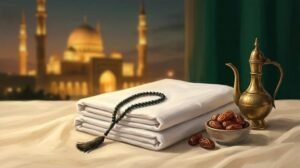
Hajj begins with Ihram. The pilgrim makes the intention for Hajj, enters a special state of purity, and men wear two simple white unstitched cloths. Women wear their normal modest dress. In Ihram, certain things become forbidden, such as cutting hair and nails, using perfume, and arguing or harming others.
Ihram teaches equality and humility. A king and a worker look the same. No one can show off wealth or status before Allah.
Tawaf and Sa’i
In Makkah, pilgrims perform Tawaf: walking seven times around the Kaaba, the direction Muslims face in prayer. Then they pray two rak’ahs near Maqam Ibrahim, if possible.
Next is Sa’i: walking seven times between the hills of Safa and Marwah. This remembers the desperate search of Hajar for water for her baby son Ismail, until Allah caused the water of Zamzam to flow. Pilgrims also drink Zamzam water, which the Prophet (peace be upon him) described as a blessed water. (Sahih Muslim)
The Day of Arafat
The 9th day of Dhul Hijjah is the most important day of Hajj. All pilgrims gather on the plain of Arafat from noon until sunset, praying, making dua, seeking forgiveness, and remembering Allah. The Prophet Muhammad (peace be upon him) said: “Hajj is Arafat.” (Sunan al-Tirmidhi, Sunan Abu Dawud)
Arafat is a picture of the Day of Judgement, when all people will stand before Allah. It is a day of tears, hope, and mercy. The Prophet (peace be upon him) also said that there is no day on which Allah frees more people from the Fire than the Day of Arafat. (Sahih Muslim)
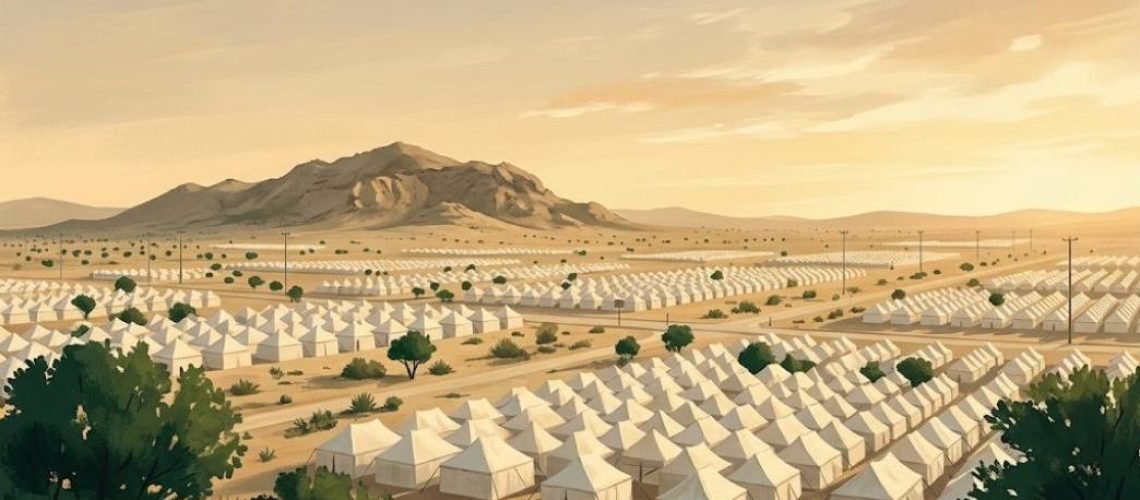
After sunset, pilgrims move to Muzdalifah, pray Maghrib and Isha, rest under the open sky, and collect small pebbles.
Stoning, Sacrifice, and Eid
On the 10th day, pilgrims throw pebbles at the largest pillar, Jamarat al-Aqaba, in Mina, remembering how Ibrahim rejected Satan. Then an animal is sacrificed, men shave or shorten their hair, and the day is celebrated by Muslims around the world as Eid al-Adha.
Pilgrims then return to Makkah for Tawaf al-Ifadah, spend days in Mina throwing pebbles at the three pillars, and finally perform the Farewell Tawaf before leaving Makkah.
The Spiritual Benefits of Hajj
The reward of an accepted Hajj is enormous. The Prophet Muhammad (peace be upon him) said: “Whoever performs Hajj for the sake of Allah and does not utter any obscene speech or do evil, will go back [free of sin] as his mother bore him.” (Sahih Bukhari, Sahih Muslim)
He (peace be upon him) also said: “An accepted Hajj has no reward but Paradise.” (Sahih Bukhari, Sahih Muslim)
Beyond forgiveness, Hajj trains patience, sacrifice, and discipline. Pilgrims face heat, crowds, and tiredness, and learn to control anger and show kindness. It strengthens the unity of the Muslim ummah, as believers from all nations pray shoulder to shoulder as brothers and sisters.
Conclusion
Hajj is not a holiday or a simple trip. It is a journey of faith that follows the footsteps of Ibrahim, Hajar, Ismail, and Muhammad (peace be upon them). From Ihram to Arafat, from Tawaf to the stoning at Mina, every ritual carries a lesson of obedience, humility, and love for Allah.
Every Muslim dreams of standing before the Kaaba and answering the call of Allah: Labbaik Allahumma Labbaik — “Here I am, O Allah, here I am.” May Allah invite us all to His House, accept the Hajj of those who go, and bless us with its lessons even if we are still waiting for our turn. Ameen.